Starting university in Delft at 18 years old, I was basically a clean slate to imprint the modernist dogma on. The Faculty of Architecture did a brilliant job of this.
I’ve been reflecting on my design journey for a while now – intensified by my collaboration with Sandra Petersson. Coming from Konstfack in Stockholm, she had a very different path, and over the past 4 years of running our firm together, she’s been steadily reshaping how I think about design.
Grooming students to breathe conceptual thinking is what my faculty excelled at. Turning an idea or story into the overall shape and logic of a building. It didn’t really matter if it made sense, as long as it sounded cool and translated into something strong, something iconic.
So I was taught to analyse context, then have an epiphany. A brilliant idea. And design while staying consistent with that idea.
It is macro-thinking suffering from an identity crisis.
Because there was also a second ambition running in parallel: achieving human scale. Creating and reinforcing communities. The modernist logic was that large buildings could feel liveable by breaking them down, adding shared spaces, designing around everyday life. But there’s a contradiction in that. Because it often remains a top-down exercise.
Interior architecture approaches things differently. Sandra, interior architect, furniture designer, and my business partner, starts from human behaviour. Movement, sequencing, atmosphere. She designs how space unfolds, not how it is imposed. Experience comes first. Structure follows.
At my university, none of this was really part of the conversation. Luis Sullivan’s phrase “Form follows function” got narrowed down to, in my opinion, an architect generation suffering from a “white box” syndrome. “Function” was reduced to something technical: program, efficiency, logic. The sensory element was almost completely taken out. Colour wasn’t discussed. Emotional response wasn’t analysed. The small quirky details, the ones people actually connect to, were barely considered. Or rather looked down upon. If anything, white was the default.
So I was shaped by a way of working where I found myself out of my comfort zone the moment things got colourful, too expressive or even slightly kitsch.
Architects are still creating community through big gestures… through form, planning, and concept. But what actually makes people feel at ease, what makes them stay, connect, recognise themselves in a space… happens at a completely different scale. It is the sensory experience that I mentioned before. It is in the small details, in the colours, materials and textures.
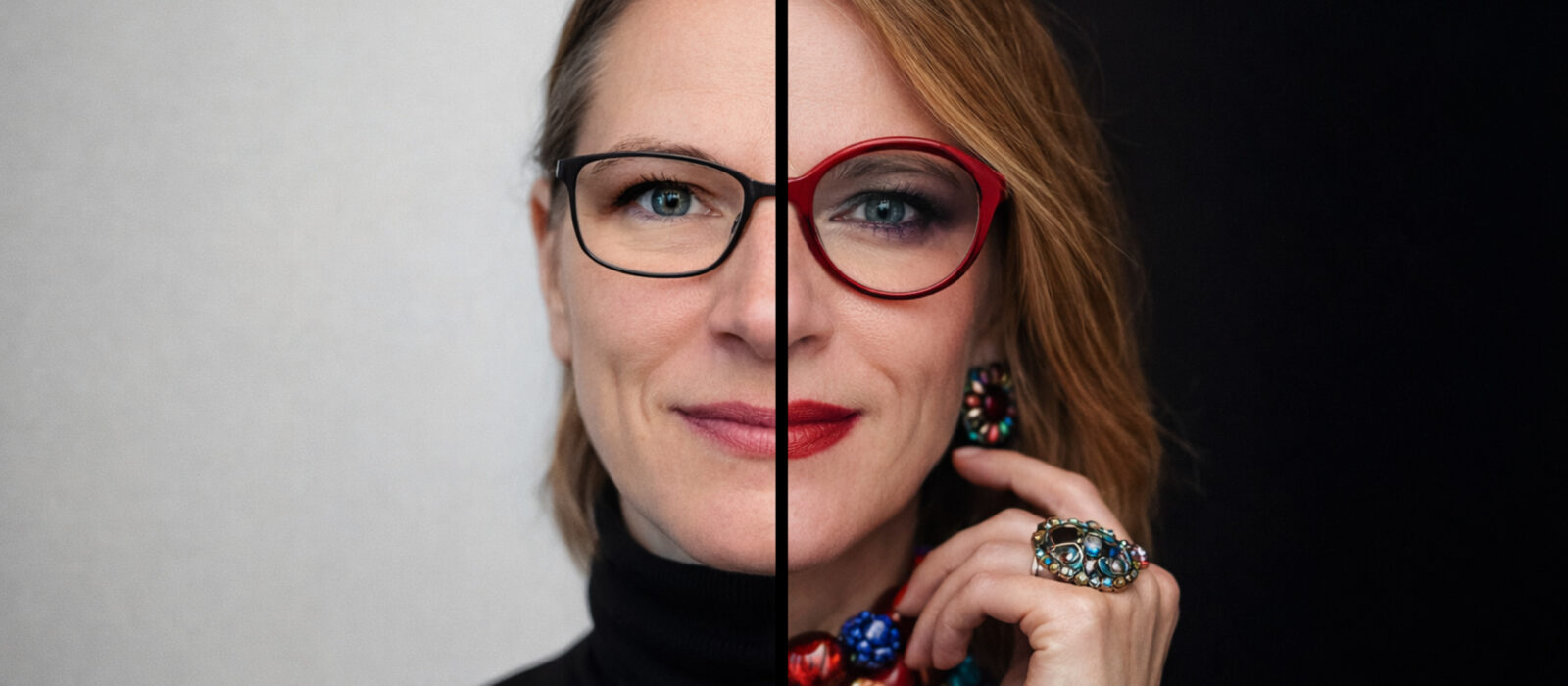
Working with Sandra, I regained confidence with colour and pattern, daring to be bold in a different way. And with it, a shift in how I design.
Starting university in Delft at 18 years old, I was basically a clean slate to imprint the modernist dogma on. The Faculty of Architecture did a brilliant job of this.
I’ve been reflecting on my design journey for a while now – intensified by my collaboration with Sandra Petersson. Coming from Konstfack in Stockholm, she had a very different path, and over the past 4 years of running our firm together, she’s been steadily reshaping how I think about design.
Grooming students to breathe conceptual thinking is what my faculty excelled at. Turning an idea or story into the overall shape and logic of a building. It didn’t really matter if it made sense, as long as it sounded cool and translated into something strong, something iconic.
So I was taught to analyse context, then have an epiphany. A brilliant idea. And design while staying consistent with that idea.
It is macro-thinking suffering from an identity crisis.
Because there was also a second ambition running in parallel: achieving human scale. Creating and reinforcing communities. The modernist logic was that large buildings could feel liveable by breaking them down, adding shared spaces, designing around everyday life. But there’s a contradiction in that. Because it often remains a top-down exercise.
Interior architecture approaches things differently. Sandra, interior architect, furniture designer, and my business partner, starts from human behaviour. Movement, sequencing, atmosphere. She designs how space unfolds, not how it is imposed. Experience comes first. Structure follows.
At my university, none of this was really part of the conversation. Luis Sullivan’s phrase “Form follows function” got narrowed down to, in my opinion, an architect generation suffering from a “white box” syndrome. “Function” was reduced to something technical: program, efficiency, logic. The sensory element was almost completely taken out. Colour wasn’t discussed. Emotional response wasn’t analysed. The small quirky details, the ones people actually connect to, were barely considered. Or rather looked down upon. If anything, white was the default.
So I was shaped by a way of working where I found myself out of my comfort zone the moment things got colourful, too expressive or even slightly kitsch.
Architects are still creating community through big gestures… through form, planning, and concept. But what actually makes people feel at ease, what makes them stay, connect, recognise themselves in a space… happens at a completely different scale. It is the sensory experience that I mentioned before. It is in the small details, in the colours, materials and textures.
Working with Sandra, I regained confidence with colour and pattern, daring to be bold in a different way. And with it, a shift in how I design.
Signed,
Judith